
Essential Power Tools Every Beginner Woodworker Needs
Walk into a tool store for the first time and the choices can feel endless. Saws, sanders, routers, planers, jointers, and dozens of accessories line the shelves, each promising to make your projects easier. As a beginner, it is tempting either to buy everything at once or to be so overwhelmed that you buy nothing. Neither approach works well.
The truth is that you can build a surprising range of furniture, shelves, boxes, and outdoor projects with a short list of well-chosen power tools. This guide explains which tools matter most, what each one does, and in what order to buy them. It also covers a few supporting items, safety gear, and tools that you can safely postpone until your skills grow.
How to Think About Buying Tools
Before you spend money, ask yourself what you actually want to build. A person who plans to make picture frames and small boxes needs a different set of tools than someone building a deck or a dining table. Let your projects guide your purchases, and buy tools when a project requires them, not before.
- Quality over quantity. One good drill is better than five cheap tools that frustrate you.
- Consider a battery platform. Many cordless tools share the same battery. Choosing one system and sticking with it saves money over time.
- Buy used wisely. Quality corded tools often last decades. Check cords, switches, and any play in moving parts before buying second-hand.
- Do not forget the blades and bits. A sharp, high-quality blade makes a basic saw perform much better.
- Learn each tool well. Read the manual, practice on scrap wood, and add new tools only when you feel comfortable with the ones you own.
1. Cordless Drill/Driver
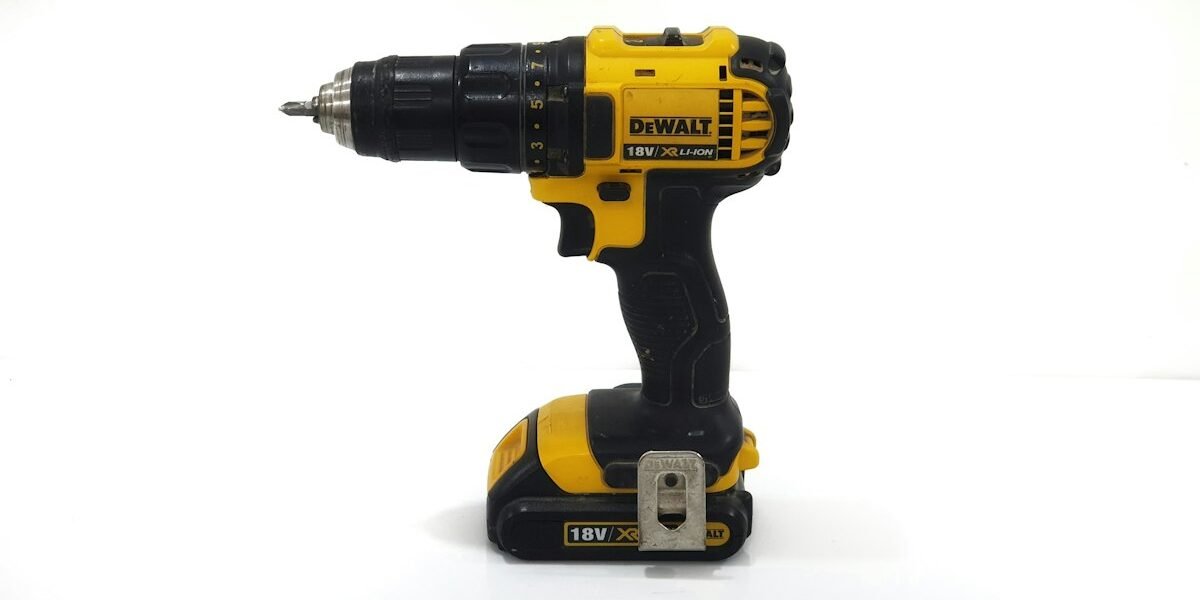
If you buy only one power tool, make it a cordless drill/driver. It drills holes, drives screws, mixes paint, and powers many accessories. It is the most versatile tool in any shop and the first one most woodworkers reach for.
What to look for
- Voltage: An 18 to 20 volt model is a strong all-around choice.
- Brushless motor: More efficient and longer lasting than brushed motors, though it may cost a bit more.
- Adjustable clutch: Helps prevent stripping screws and damaging the wood.
- Two batteries: One can charge while you work with the other.
- Keyless chuck: Makes changing bits quick and easy.
Useful accessories
Start with a set of twist bits, brad point bits for clean holes in wood, a countersink bit, and a basic set of driver bits. A pocket-hole jig, while not a power tool, pairs with your drill to create strong joints quickly and is popular with beginners.
2. Circular Saw
A circular saw is the workhorse for breaking down plywood sheets, cutting boards to length, and making rough cuts in lumber. It is portable, affordable, and much safer to learn on than many larger stationary saws.
What to look for
- Blade size: A 7-1/4 inch blade is the standard for corded and cordless models.
- Depth and bevel adjustments: Make sure they are easy to use and lock firmly.
- Electric brake: Stops the blade quickly after you release the trigger.
- Comfortable handle and weight: You will hold it with one hand while guiding it with the other.
Making it accurate
A circular saw cuts well when guided by a straightedge. Clamp a straight board or a ruler guide to your workpiece and run the saw base along it. This simple technique gives straight cuts that rival more expensive tools. Replace the stock blade with a quality fine-tooth blade for cleaner cuts in plywood and hardwood.
3. Jigsaw
A jigsaw makes curved and irregular cuts that other saws cannot. It is perfect for cutting shapes, circles, notches, and cutouts for sinks or outlets. It is also lightweight, simple to use, and very affordable.
What to look for
- Orbital action setting: Lets you choose faster, more aggressive cuts or slower, cleaner ones.
- Variable speed: Helps you match the speed to the material.
- Tool-free blade change: Saves time and frustration.
- Bevel adjustment: Useful for angled cuts.
Blade selection is important. Use a fine-tooth blade for smooth cuts in plywood and a coarser blade for fast cuts in thick lumber. Let the saw do the work, and do not force it, which can bend the blade and cause rough or angled cuts.
4. Random Orbital Sander
Sanding is one of the most time-consuming parts of woodworking, and a random orbital sander does the job quickly while leaving a smooth finish with few visible swirl marks. For a modest price, it saves hours of hand sanding and noticeably improves the look of your projects.
What to look for
- 5-inch pad: The most common size, with plenty of sandpaper options.
- Hook-and-loop pad: Makes swapping sandpaper discs fast.
- Dust collection: A dust bag or a port that connects to a vacuum is worth having.
- Variable speed: Helps with delicate work and finishing.
Start with 80 or 100 grit for removing material, then move through 120, 150, and 180 or 220 grit for a smooth finish. Move the sander slowly and evenly, and let the weight of the tool do the work. Do not press down hard.
5. Miter Saw
A miter saw makes fast, accurate crosscuts and angled cuts. It is ideal for cutting boards to length, building frames, and trimming molding. Once you have used one, you will wonder how you worked without it.
Types of miter saws
| Type | Capacity | Best For | Notes |
|---|---|---|---|
| Basic miter saw | Moderate crosscuts | Trim, small projects | Affordable and compact |
| Compound miter saw | Miter and bevel cuts | Crown molding, angled joints | More versatile |
| Sliding compound miter saw | Wide boards | Shelving, furniture, wide stock | More expensive and larger |
A 10-inch or 12-inch compound miter saw is a great starting point for most beginners. If you plan to cut wide boards, a sliding model provides extra capacity. Pair it with a good blade, and support long boards on both sides to keep them level.
6. Table Saw
The table saw is often called the heart of the woodworking shop. It rips boards to width, makes precise crosscuts with a sled, cuts joinery, and handles sheet goods. It is also the tool that demands the most respect, because it is a leading cause of shop injuries.
Is it necessary right away?
Not always. A circular saw and a miter saw can cover most of what a beginner needs. Buy a table saw when you find yourself needing to rip many boards to a consistent width or when your projects require repeatable accuracy. A portable jobsite table saw is a reasonable first choice for a small shop. A contractor or hybrid saw offers more power and a larger table if you have room.
Safety considerations
- Learn proper technique before your first cut, ideally from a class or an experienced woodworker.
- Use a riving knife or splitter, blade guard, push sticks, and push blocks.
- Never cut freehand, and never reach over the blade.
- Wear safety glasses and hearing protection.
7. Router
A router uses a spinning bit to shape edges, cut grooves, make joints, and hollow out areas. It can add a decorative profile to a tabletop, cut a groove for a drawer bottom, or create a clean rabbet for a cabinet back. Few tools offer as much variety for the price.
Fixed-base vs. plunge routers
- Fixed-base: Easy to control and ideal for edge work.
- Plunge: Lets you lower the bit into the wood for cuts that start in the middle of a workpiece.
- Combination kits: Offer both bases with one motor and are great for beginners.
Start with a few basic bits, such as a roundover bit, a chamfer bit, and a straight bit. Always make shallow passes, move the router in the correct direction, and keep your hands clear of the bit. Using a router table later increases accuracy and safety for small parts.
Helpful Extras
These tools and accessories are not always listed as essentials, but they make your work easier and more accurate.
- Clamps: You can never have enough. Start with a few bar clamps and quick-grip clamps.
- Brad nailer: Useful for trim, small boxes, and holding parts while glue dries.
- Pocket-hole jig: Makes strong joints quickly with only a drill.
- Combination square and measuring tools: Accuracy begins with good measurements.
- Workbench or sturdy sawhorses: A stable surface improves both safety and results.
- Shop vacuum: Keeps dust under control and connects to many tools.
Suggested Buying Order
| Step | Tool | Why It Comes Here |
|---|---|---|
| 1 | Cordless drill/driver | Used in nearly every project |
| 2 | Circular saw with a straightedge guide | Breaks down boards and sheet goods |
| 3 | Random orbital sander | Saves time and improves every finish |
| 4 | Jigsaw | Handles curves and cutouts |
| 5 | Miter saw | Fast, accurate crosscuts and angles |
| 6 | Router | Edges, grooves, and joinery |
| 7 | Table saw | Precision ripping and advanced joinery |
This order can change depending on your goals. If you will mostly build furniture from dimensional lumber, you might choose a miter saw earlier. If you plan to make cabinets from plywood, a track guide for your circular saw or a table saw may be a higher priority.
Tools That Can Wait
Some tools are excellent but not necessary at the start. Postponing them helps you avoid spending money on equipment you may not use.
- Jointer and planer: Great for milling rough lumber, but you can buy surfaced boards instead.
- Band saw: Valuable for resawing and curves, but a jigsaw covers many basic needs.
- Drill press: Offers precise, straight holes, and is a nice upgrade after you build a few projects.
- Lathe: A specialized tool for turning bowls, spindles, and pens.
- Dust collector: Important as your shop grows, but a shop vacuum is enough to begin with.
Safety Gear You Should Not Skip
Power tools deserve respect. Budget for protective equipment at the same time as your first tool purchase.
- Safety glasses or goggles for every operation that makes chips or dust.
- Hearing protection such as earmuffs or earplugs.
- A dust mask or respirator when sanding or cutting.
- Push sticks and push blocks to keep your hands away from blades.
- A fire extinguisher and a first aid kit kept in an easy-to-reach spot.
Also, read every manual, unplug tools or remove batteries when changing blades or bits, and avoid loose clothing, dangling jewelry, and loose hair around moving parts. Follow each manufacturer’s instructions, which take priority over any general advice in this article.
Frequently Asked Questions
What is the very first tool I should buy?
A cordless drill/driver. It is useful for almost every project, and it helps you learn the basics of fasteners and joinery.
Should I choose corded or cordless tools?
Both have advantages. Cordless tools are convenient and portable, while corded tools often provide steady power at a lower price. Many woodworkers use cordless drills and drivers, and corded tools for stationary or high-power jobs.
Can I build furniture with just a few tools?
Yes. A drill, circular saw, jigsaw, sander, and a few clamps can build many beds, tables, benches, and shelves, especially when you use pocket-hole joinery.
How much should I spend?
Start with a modest budget and invest in the tools you use most. Mid-range tools usually offer a good balance of quality and price. Avoid the cheapest tools that feel flimsy, and avoid spending on professional-grade tools you do not need yet.
Is it better to buy a kit or individual tools?
Combo kits can offer good value when they include tools you will actually use and share a battery platform. Check what is included and avoid kits padded with accessories you do not need.
Final Thoughts
You do not need a fully equipped workshop to start woodworking. A cordless drill, a circular saw, a jigsaw, and a random orbital sander will take you a long way. As your projects grow more ambitious, you can add a miter saw, a router, and eventually a table saw, always learning each tool thoroughly before moving on.
Focus on building skills, buying quality over quantity, and putting safety first. Every experienced woodworker started with a small set of tools and a simple first project. Pick a project that excites you, buy only what it requires, and enjoy the process of making something with your own hands.
Building a Smart Workshop Tool Collection
Stepping into woodworking can feel overwhelming when faced with specialized power machinery. Beginners do not need an industrial workshop to create high-quality tables, shelves, or storage solutions. Investing in versatile, foundational tools allows you to complete 90% of home DIY woodworking tasks safely and efficiently.
1. The Compact Circular Saw
A 7-1/4-inch corded or cordless circular saw is the most economical tool for breaking down large plywood sheets and crosscutting dimensional lumber.
- Essential Accessory: Pair your saw with a straight-edge track or DIY guide fence to produce factory-straight cuts every time.
- Blade Choice: Swap stock construction blades for a 40-tooth or 60-tooth fine-finish carbide blade to eliminate tear-out on delicate veneers.
2. Cordless Drill and Impact Driver Combo Set
Drilling pilot holes and driving structural screws are fundamental steps in almost every project. A 18V or 20V brushless driver combo kit delivers the torque necessary to sink long fasteners without stripping screw heads.
3. Random Orbital Sander
Manual hand sanding is tedious and often leads to uneven surfaces. A 5-inch random orbital sander spins and oscillates simultaneously, eliminating swirl marks and preparing wood surfaces for stain or varnish in a fraction of the time.
4. Jigsaw for Curved and Intricate Cuts
When your design requires internal cutouts, rounded corners, or decorative profiles, a variable-speed jigsaw is indispensable. Always select the appropriate T-shank blade tailored to your material thickness and wood density.